THE TRAVELLING TABLE
For many passengers, an airport is a place to move through. You arrive, collect your luggage and continue towards the city. Aerocity challenges that traditional idea.
Located beside Indira Gandhi International Airport, Aerocity functions almost like a compact satellite district. It is geographically connected to Delhi, but its identity has been shaped by the airport rather than by an older residential neighbourhood or traditional city centre.
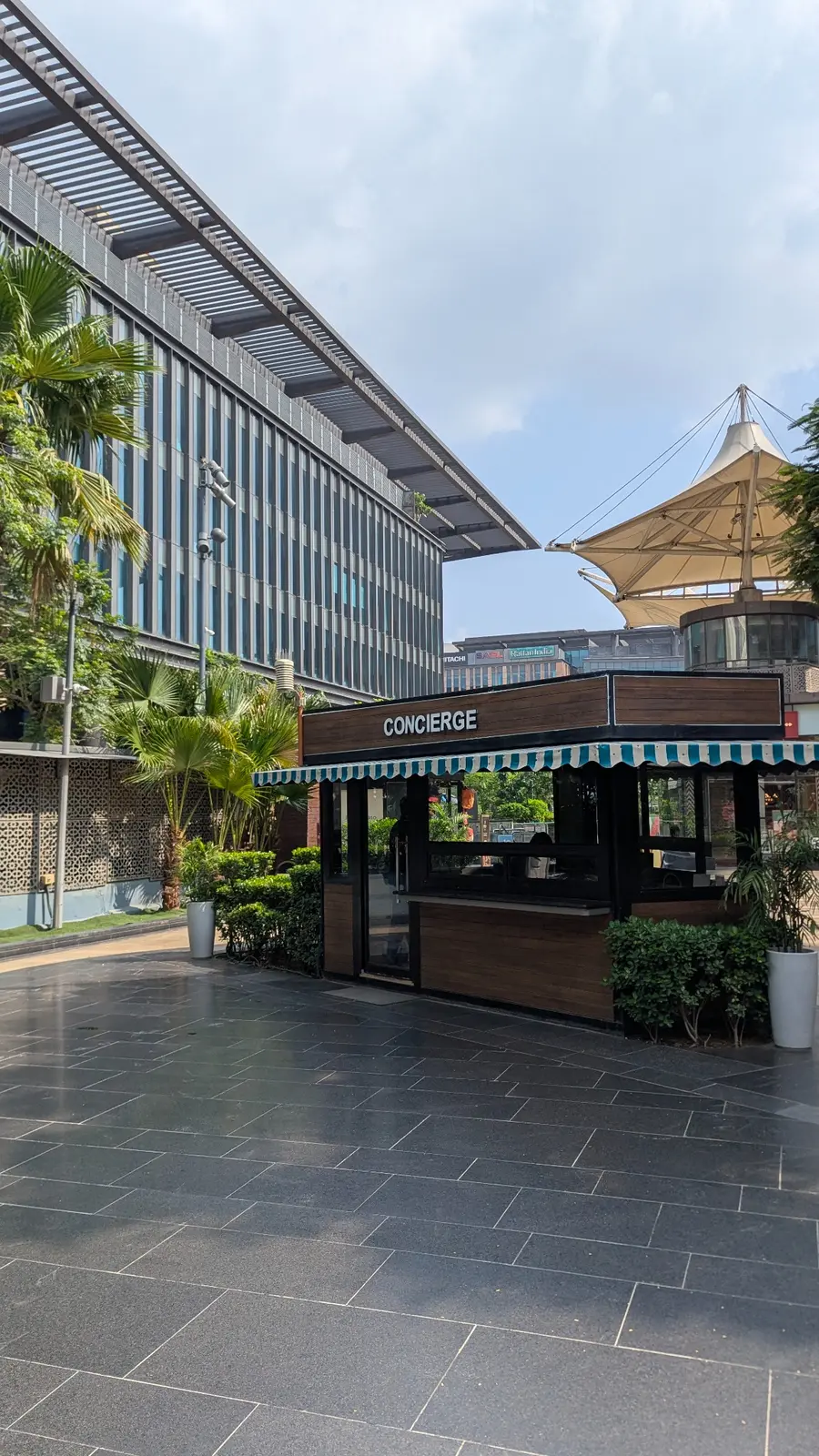
Hotels, offices, restaurants, cafés, event spaces and recreational areas sit within a relatively compact zone. Instead of treating the airport as isolated infrastructure outside the city, Aerocity extends the airport economy into the surrounding area.
From passenger terminal to airport district
Traditional passenger airports were designed around a simple economic model: move people and aircraft as efficiently as possible.
Most commercial activity remained inside the terminal. Travellers bought food, used a lounge or visited duty-free shops before continuing elsewhere. Hotels and offices were usually scattered across the surrounding city.
Aerocity introduces a broader model. The airport becomes an anchor for an entire business and hospitality district.
A traveller can land, check into a hotel, attend a conference, meet a client and have dinner without travelling deep into Delhi. A company can organise an event close to international transport links. Residents from Delhi and Gurugram can also visit Aerocity without having a flight to catch.
This means the airport is no longer serving only passengers. It becomes part of a larger network of businesses, services and social spaces.
Infrastructure designed to work together
Aerocity’s main advantage is integration.
Hotels, restaurants, offices and public spaces are located within walking distance of one another. This reduces the need to repeatedly enter Delhi’s traffic for short journeys between meetings, accommodation and meals.
The experience can feel very different from the rest of the city. Footpaths are wider, buildings are newer and the area has been planned around commercial activity, hospitality and movement.
For business travellers, this creates convenience. Someone visiting Delhi for a short meeting does not necessarily need to spend hours travelling between the airport, hotel and workplace.
For international visitors, Aerocity can also provide a softer arrival. Delhi may initially feel intense—especially after a long flight. Aerocity offers accommodation, familiar services and dining options close to the airport before a traveller begins exploring the wider city.
Positioned between Delhi and Gurugram
Aerocity benefits from its location between central Delhi and Gurugram, two of the National Capital Region’s most important business areas.
The Delhi Aerocity Metro station is on the Airport Express Line, offering a direct connection towards New Delhi. Road access also links the district with the airport terminals, South Delhi and the major corporate areas of Gurugram.
No part of the region is immune to traffic, and travel times still depend on the hour. However, Aerocity gives visitors several transport options instead of making them entirely dependent on private cars.
Its location is particularly useful for conferences, short business visits and meetings involving people arriving from different parts of the region—or from different countries.
A destination without a flight
Perhaps the most interesting change is that people now visit Aerocity even when they are not travelling.
Its restaurants, cafés, hotels and event venues have given the district a social identity beyond the airport. People meet for dinner, attend exhibitions, work from cafés or join community gatherings.
This changes the relationship between the airport and the city. The surrounding district is no longer simply a waiting area for travellers. It becomes a destination in its own right.
The atmosphere is more controlled and polished than most Delhi neighbourhoods. That can make it convenient, although it also means Aerocity does not offer the same texture, spontaneity or everyday street life found elsewhere in the city.
It should not be treated as a replacement for experiencing Delhi. Instead, it offers a different side of the region: international, business-oriented and designed around connectivity.
The limitations of a planned airport district
Convenience comes with trade-offs.
Aerocity can feel insulated from the city around it. Prices are often higher than in ordinary Delhi neighbourhoods, and much of the experience is shaped by hotels, restaurants and commercial venues.
Visitors who remain only within Aerocity may leave with a comfortable but incomplete impression of Delhi.
The district works best as a starting point, meeting place or convenient base. From there, travellers can move towards Delhi’s markets, monuments, residential neighbourhoods and public spaces.
Aerocity provides clarity and ease. The wider city provides history, complexity and cultural depth. Experiencing both creates a more complete understanding of Delhi.
A different model for the modern airport
Aerocity demonstrates how airports are evolving.
They are no longer only transport facilities positioned at the edge of a city. Increasingly, they act as economic centres that attract hospitality, offices, entertainment and public transport infrastructure.
This model allows a passenger airport to generate activity beyond flights. Travellers stay nearby, companies establish offices, conferences bring visitors and restaurants attract local residents.
The result is an airport district that serves several types of people at once: passengers, professionals, hotel guests, residents and social groups.
Aerocity may not feel like a traditional part of Delhi, but that is precisely what makes it interesting. It represents a newer form of urban development—one organised around global movement, short distances and the idea that an airport can become a place to meet, work and spend time rather than simply a place to leave.