THE TRAVELLING TABLE
Delhi is one of the most interesting cities in the world for food.
Its cuisine cannot be reduced to a single tradition. The city has absorbed flavours carried by migrants, traders, royal kitchens, neighbouring regions and communities from across India. Today, it is possible to begin the morning with a South Indian breakfast, eat a Punjabi lunch, order Tibetan momos in the evening and finish the day at a restaurant serving food from another part of Asia or the world.
For travellers and expats, food offers one of the easiest ways to understand the city. Every meal reveals something about Delhi’s history, migration and changing identity.
The flavours Delhi made its own
Certain dishes are now inseparable from Delhi.
Butter chicken is perhaps the most famous example. Its smoky pieces of tandoori chicken, rich tomato gravy, butter and cream create a flavour that has been imitated across the world. Yet a well-prepared version in Delhi still feels different.
Dal makhani carries a similar identity. Black lentils are cooked slowly until they become creamy, earthy and deeply comforting. Served with naan, roti or rice, it is a simple-looking dish that depends on time and careful preparation.
Delhi is also known for chole bhature, kebabs, nihari, parathas, chaat and countless varieties of stuffed bread. Many of these dishes are available elsewhere, but their flavour is closely connected to the city’s local ingredients, cooking traditions and appetite for bold food.
India on a single plate
India is a huge and culturally diverse country. Every state has its own ingredients, techniques, staple foods and ideas about what makes a satisfying meal.
Delhi brings many of these regional traditions together.
You can find Bengali fish curries, Kashmiri dishes, Rajasthani thalis, Goan seafood, Maharashtrian snacks and food from different parts of southern and northeastern India. Some restaurants specialise in one region, while others create menus that travel across several states.
This variety makes Delhi a useful introduction to Indian food, but it is worth remembering that no single meal can represent the entire country. What is considered everyday food in Kerala may be unfamiliar in Punjab. A dish from Nagaland may use ingredients rarely found in a Gujarati kitchen.
Exploring Indian food in Delhi is less about finding one national cuisine and more about discovering many regional cuisines that happen to share the same city.
State Bhawans: regional food without leaving Delhi
One of the most distinctive ways to explore regional Indian food is through the state Bhawans.
These buildings primarily serve as official guest houses and administrative centres for India’s states. Many also operate canteens or restaurants that serve food associated with their home region.
The experience is often more straightforward than dining at a fashionable restaurant. The rooms may be simple, the menus focused and the service practical. The food, however, can offer a direct introduction to regional flavours.
A visit to a state Bhawan can take you from a coastal fish curry to a spicy Andhra meal or a comforting plate of food from India’s northeast—all without leaving Delhi.
Opening hours, visitor access and menu availability can change, so it is sensible to check before travelling.
Delhi looks beyond India
The city’s food culture also extends beyond the country.
Delhi has long welcomed diplomats, students, professionals, refugees and travellers from different parts of Asia and the wider world. Their presence has shaped the city’s restaurants.
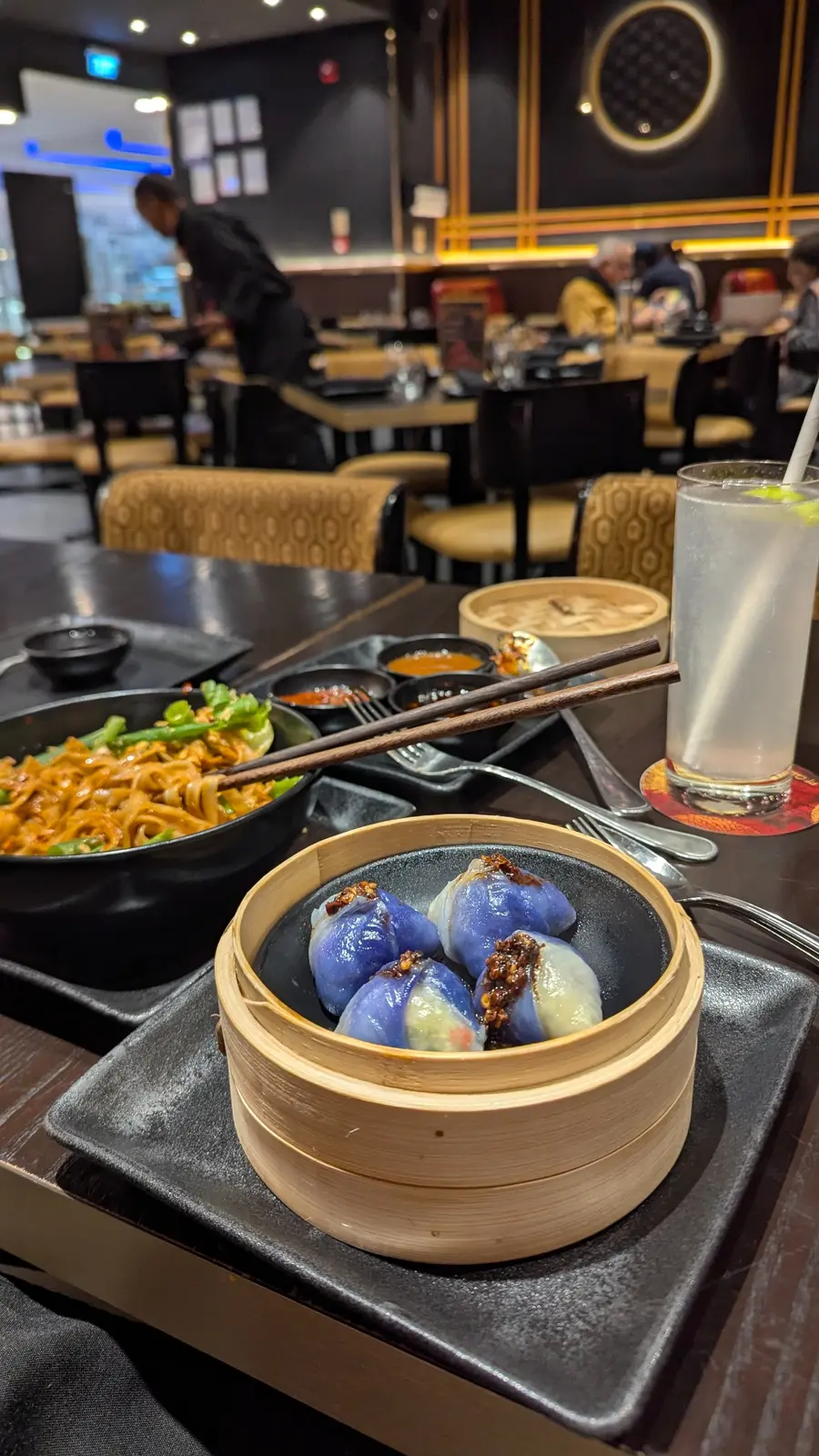
Tibetan and Nepali food is particularly visible, with momos and thukpa now familiar across Delhi. Korean, Japanese, Thai, Vietnamese, Afghan and Middle Eastern restaurants have also become easier to find.
International hotels and newer commercial districts offer European, Mediterranean and global menus, while neighbourhood cafés continue to experiment with food from different cultures.
Some dishes are adapted for local preferences, while others remain closer to their original traditions. Both versions reveal something about how food changes when it travels.
A restaurant can arrive at your door
Delhi’s food-delivery culture has made this variety remarkably accessible.
In many neighbourhoods, meals can arrive in roughly 30 minutes, depending on the restaurant, distance, weather and traffic. A person can explore food from several parts of India without leaving home.
This convenience is particularly useful for new residents. During the first few days in the city, ordering food can feel easier than navigating an unfamiliar market or restaurant.
Delivery apps also allow users to compare menus, prices and customer reviews. However, high ratings do not always guarantee consistent quality. Begin with well-reviewed restaurants, check recent comments and order a smaller portion before committing to a large meal.
Delivery is convenient, but it should not replace eating outside completely. The sound of a busy dining room, the smell of a tandoor and the conversation around a shared table are part of the experience.
Understanding spice
People unfamiliar with Indian or Asian food sometimes use “spicy” to describe every strong flavour. Indian cooking is more complex.
Spices such as cumin, coriander, cardamom, turmeric and fenugreek add aroma and depth without necessarily creating heat. Chillies are responsible for much of the burning sensation people associate with spicy food.
If you are not accustomed to chilli, begin gradually. Ask whether a dish can be prepared mild, and avoid ordering several unfamiliar spicy dishes together.
Rice, bread, yoghurt and raita can help balance a meal. There is no need to force yourself through discomfort to prove that you can handle local food. Developing familiarity over time is a better approach. As your palate adjusts, you may begin to notice flavours that were initially hidden behind the heat.
If a dish repeatedly causes significant discomfort, choose something gentler. Enjoying Delhi’s food is not a test of endurance.
Go slowly and remain curious
Delhi offers more food than anyone could explore in a single visit.
Begin with familiar dishes, then move gradually towards regional restaurants, state Bhawans, neighbourhood favourites and foods you have never encountered before.
Ask people what they eat at home rather than only asking for the city’s most famous restaurant. Some of the best recommendations come from conversations with colleagues, neighbours, drivers and fellow travellers.
Food is one of Delhi’s most accessible forms of cultural exchange. It brings different states, countries and communities together—sometimes around a restaurant table and sometimes through a delivery arriving at your door.
Come with curiosity, give your palate time to adjust and accept that you will never taste everything.
That is part of the pleasure. Delhi always leaves another dish for the next meal.