THE TRAVELLING TABLE
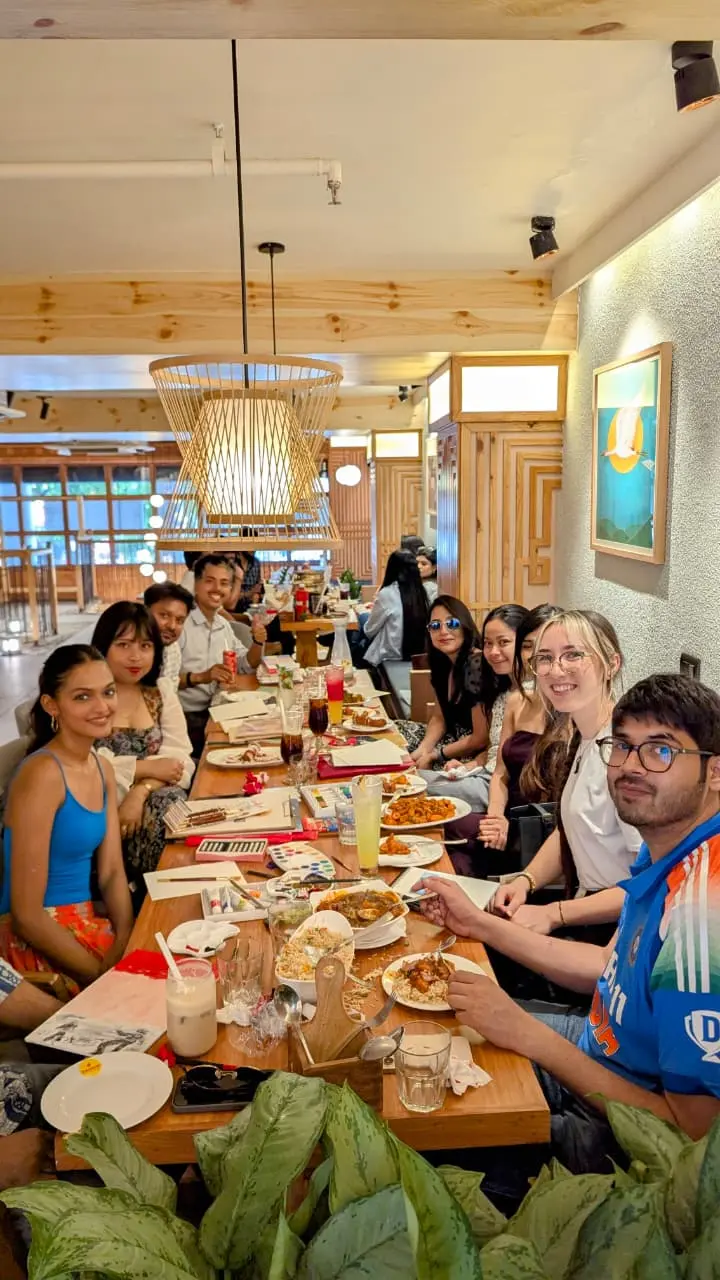
Delhi has always known how to gather. Families meet over long meals, neighbours share evening conversations, religious festivals fill streets and parks, and friendships often grow through school, university or work.
What has been less visible is the open, recurring, hobby-first meetup: a gathering where people who do not already know one another can simply arrive, take part and gradually become a community.
Compared with many cities in Europe or North America, where public clubs and platforms such as Meetup have made these gatherings easy to find for years, Delhi’s scene can still feel scattered. Events are often announced through Instagram stories, WhatsApp groups, café pages or a friend who knows a friend. Yet the culture is changing quickly. From running communities to book clubs, and from heritage walks to food trails, Delhi NCR is building its own version of the global meetup movement.
Why meetups matter in a city like Delhi
Delhi is enormous, but size does not automatically make social life easy. Long commutes divide neighbourhoods. Workplaces can become the centre of a person’s routine. People who have recently moved to the city—students, professionals, expats and returning residents—may be surrounded by millions of people while still finding it difficult to form a new circle.
A good community meetup gives people a reason to meet without forcing the conversation. You do not have to walk into a room and invent an introduction. You can run the same route, discuss a chapter, photograph a market, learn a board game or follow a storyteller through an old neighbourhood. The activity carries the first few minutes; the people create what follows.
This is especially useful for newcomers. Our story about friendships that begin with a simple question explores why conversations often become easier when everyone is slightly outside their usual circle.
Running communities are leading the way
Running clubs are among the most visible examples of Delhi’s new community culture. Early mornings in Lodhi Garden, Nehru Park, Dwarka, Noida and Gurugram now bring together beginners, regular runners and people training for their first race.
Gurgaon Road Runners has built a large fitness community across NCR, with running and training groups extending beyond Gurugram into Delhi, Noida, Faridabad and Ghaziabad. Delhi also has smaller neighbourhood collectives and newer groups such as Delhi Run Collective and D3X Running Club.
The Bhag, often called Bhag Club, represents a newer, more social format of running community in Delhi. Its gatherings combine group runs with elements such as food, games, recovery sessions and music. The format makes running feel less like solitary training and more like an active weekend meetup, while still welcoming people who are taking their first steps into fitness.
The appeal is not only exercise. A recurring run creates familiarity. You begin by recognising faces, then remembering names, and eventually sharing breakfast or coffee after the route. The meetup works because participation is simple: arrive in suitable shoes, choose a comfortable pace and return the following week.
Reading together without needing to perform
Book communities offer a quieter route into the city. Lodhi Reads—often described simply as the Lodhi Garden book club—invites people to bring a mat and a book for silent reading. There is no required title, formal discussion or pressure to network. The shared activity is simply reading in the presence of other readers.
Similar reading communities have appeared in Gurugram and Noida, while Book Club NCR organises café-based gatherings across different parts of the region. Some groups focus on one book and a structured conversation; others allow everyone to bring their current read.
This range matters. Not everybody wants a high-energy social event. A community can be meaningful even when people spend most of the afternoon quietly turning pages.
Heritage and food become social experiences
Delhi’s history is another natural meeting point. A monument or market gives strangers something immediate to notice, question and discuss.
Delhi By Foot has organised heritage walks, book readings and cultural gatherings around the city’s neighbourhoods and stories. Other walk leaders explore themes such as Sufi Delhi, the lanes of Shahjahanabad, the architecture of Mehrauli, the trees of Lodhi Garden or the traces of 1857.
Food walks create a similar experience through taste. Delhi Food Walks runs guided explorations of Old Delhi and other food districts, combining local dishes with the history of the streets where they are prepared. These walks may be more curated—and often paid—than a casual community meetup, but they still bring together people who might otherwise never share a table.
The most interesting part is often what happens between stops. People compare flavours, exchange recommendations and talk about the neighbourhoods they grew up in or have just discovered.
Hobby meetups are spreading across NCR
The emerging scene is not limited to central Delhi. Gurugram and Noida have their own reading circles, run clubs, creative sessions and game nights. In a region where travelling across the city can take longer than the meetup itself, local groups make participation much easier.
Misfits runs interest-based clubs in Gurugram covering activities such as hiking, board games, books, cricket and music. The Social Table Delhi uses modern board games to create a beginner-friendly social setting where conversation happens naturally around the rules and the table.
Across NCR you can also find photography walks, cycling groups, theatre workshops, language exchanges, art jams, pottery sessions, badminton games, film discussions, quiz nights and technology communities. Some meet weekly, some monthly and others appear for a season before returning in a new form.
Because schedules and venues change frequently, check the organiser’s latest page before travelling. It is also worth looking beyond a single platform: Instagram, Meetup, District, café noticeboards and neighbourhood WhatsApp groups may all reveal different parts of the same city.
How to join an existing meetup
Your first event does not need to be a major commitment. Choose an activity you would enjoy even if you spoke to only one person.
- Read the event description and check whether registration or payment is required.
- Confirm the latest venue and timing directly with the organiser.
- Tell someone where you are going when meeting an unfamiliar group for the first time.
- Arrive with enough time to find the host instead of entering after everyone has settled.
- Introduce yourself to one person rather than trying to meet the entire room.
- Attend more than once before deciding whether the community is right for you.
The first meetup can feel slightly awkward. That does not mean it has failed. Familiarity usually comes through repetition, not one perfect evening.
Or create the gathering you cannot find
If your hobby is missing, you do not need to wait for somebody else to organise it.
Begin with a clear idea: a Sunday sketching hour, a monthly language exchange, a neighbourhood cycling route or a table for people who want to discuss independent cinema. Keep the first gathering small and specific. A public park, accessible café, library or coworking common area can be enough.
Explain what will happen, how long it will last, whether it is free and what people need to bring. Clear communication makes it easier for someone to attend alone. Consistency matters more than scale; five people who return can create a stronger community than fifty people who appear once.
It also helps to design the event around participation rather than promotion. Give people something to do, a natural way to introduce themselves and permission to leave without pressure. The objective is not to manufacture instant friendship. It is to create the conditions in which familiarity can grow.
Delhi is not behind—it is finding its own format
Delhi’s meetup culture may not always look like the versions seen elsewhere. It is more distributed, often more informal and frequently organised through personal networks rather than one central directory. But it is no longer difficult to see the momentum.
Runners are building routines together. Readers are reclaiming public parks. Walk leaders are turning history into conversation. Hobby groups in Delhi, Noida and Gurugram are giving adults a reason to meet beyond offices, malls and existing social circles.
You can join a community that already exists or create the gathering you wish somebody else had started. Either choice begins with the same small act: showing up with an interest you are willing to share.